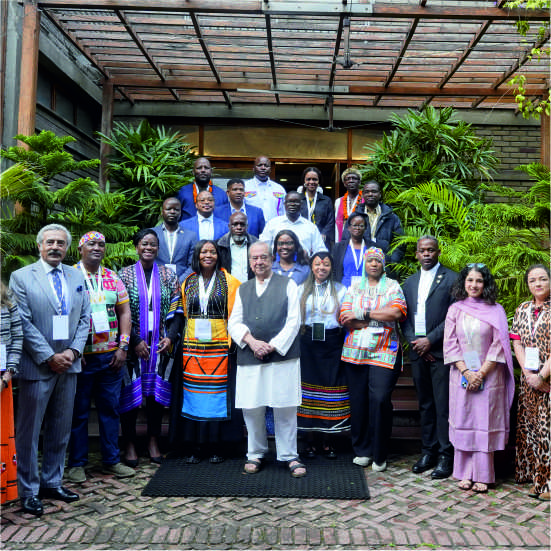
South African delegates witnessed India building fairness into green growth.
#CoCreatingJustTransition
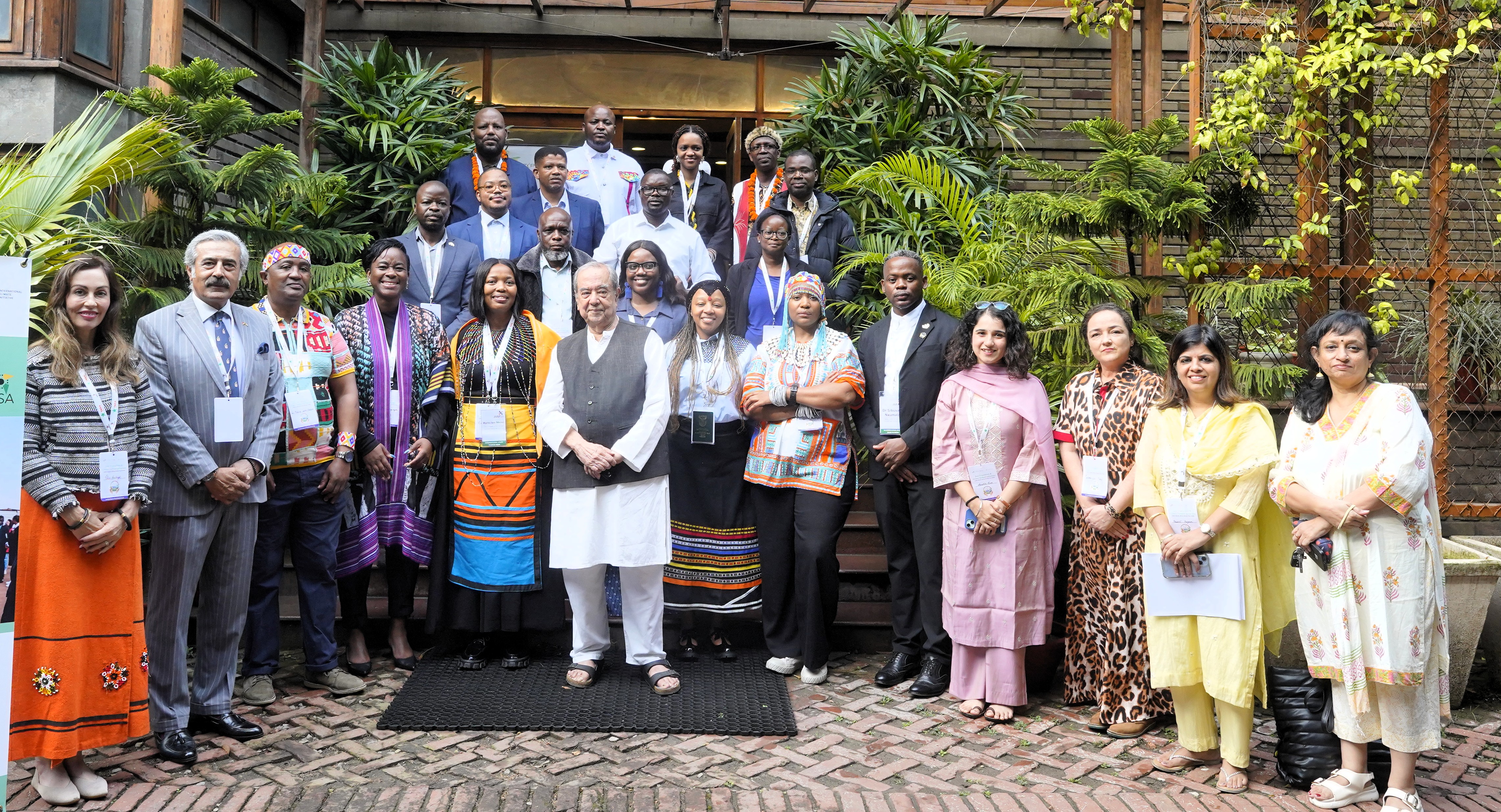
The South African delegation with the Development Alternatives (DA) and TARA teams in New Delhi.
Justice, or just us? The question opened the India and South Africa Just Transition Roundtable at Development Alternatives (DA) headquarters, attended, amongst others, by the South Africa Deputy High Commissioner in India, Mr Cedrick C Crowley and it framed every conversation that followed. The answer was unequivocal: if the poor are left behind, green risks becoming merely the new colour of the old economy.
Commissioned by Trade & Industrial Policy Strategies (TIPS), South Africa, and designed and delivered by TARA, sister concern of the DA Group, the Study Tour on Just Transition and Green Industrialisation brought 21 South African delegates from national, provincial and municipal institutions to India from 11 to 16 October 2026. India and South Africa are two energy intensive developing economies facing one dual challenge: to keep growing while they decarbonise. Across six days and seven field sites in three states, the delegation set out to see how India is attempting both, and to ask the harder question that lies beneath: Who carries the cost, and who shares the gain?
Following a Day 0 orientation that established the context and Learning Objectives, the roundtable on 12 October convened policymakers, researchers and practitioners across three themes: policy architecture and timelines, implementation on the ground, and financing the transition while measuring its fairness. Three messages defined the deliberations: On responsibility, participants affirmed the principle of fair shares, not equal shares: those who contributed most to the climate crisis bear the greatest obligation to act, and to act first. On governance, they underscored that the transition will ultimately be delivered locally, making it essential to equip municipal and district institutions with the mandate and resources to act today. On inclusion, they recognised women not as beneficiaries of the transition but as its architects, whose leadership multiplies the return on every investment made in them. Underpinning all three was a principle both nations have upheld from Gandhi's era to today's pursuit of climate justice: Vasudhaiva Kutumbakam, the world is one family.
Then the delegation left the table for the field, reading every site on a single spectrum, from scale and speed at one end to ownership and fairness at the other. At CSPL, Karo Sambhav's e-waste recovery facility in Modinagar, discarded electronics became aluminium, copper and plastic, linking circularity directly to critical minerals and green jobs. At the IIT Delhi, ‘Biogas Development and Training Centre’, kitchen waste became Bio CNG and fertiliser, in a plant that also trains the practitioners who will replicate it. In Shivpuri, a 180 MW solar cluster on rural land, lights homes in Delhi and prompted the week's sharpest reflection: scale is ‘just’ only when it pays a local dividend in land, jobs and shared benefit.
The road then turned to Bundelkhand. At TARAgram Orchha, a living demonstration campus, delegates saw fly-ash, construction waste and micro concrete roofing reshape low carbon building and met the Sahariya women who turn rags and wastepaper into handmade paper. In Chandravan, a village committee runs its own solar water supply, complete with its own safety plan, while a check dam in Mathurapura recharges the wells that sustain the fields. In Chirgaon, women showed how cow dung becomes organic paint and an enterprise of their own. Here, the other end of the spectrum came alive: resilience that is owned, not delivered.
The final day brought the field back to policy. TIPS shared its working papers building toward a Just Transition worker policy package for South Africa’s coal mine workers, while India’s mine closure reforms offered a striking counterpart through community engagement under RECLAIM. With 200 practitioners from South Africa joining online for the reflection session, national and subnational panels took up one question: what could South Africa take home and apply?
Five lessons stood out from the field. Waste is a raw material. Small plants can be classrooms. Scale needs a local dividend. Communities can own resilience. And women, given the means, turn local waste into enterprise. The road ahead, delegates agreed, rests on three Ds: decarbonise, diversify and digitalise. It moves faster when we train the trainers and invest in those who can pass on the skills a fair transition needs. That is where capacity building earns its place.
The tour set out with six objectives and met each one. (1) Policy debated at the roundtable was tested on the ground, from an industrial plant to a village water committee. (2) Green industrialisation and resource efficiency came through in e-waste recovery at CSPL, Bio CNG at IIT Delhi and low carbon building materials at TARAgram. (3) Renewable energy, circularity and resilience spanned city and village, from utility scale solar in Shivpuri to a solar water supply and check dam in Bundelkhand. (4) Women’s enterprises in Chirgaon and TARAgram showed community led models at work. (5) The roundtable, daily reflections and Day 5 panels kept peer learning constant. (6) Most lasting of all, a working network of Indian and South African institutions now stands ready for continued South South exchange.
As Sharan Burrow, former General Secretary of the International Trade Union Confederation, put it, “there are no jobs on a dead planet.” A just transition must ensure that the planet survives and that the people who power it share in what comes next.
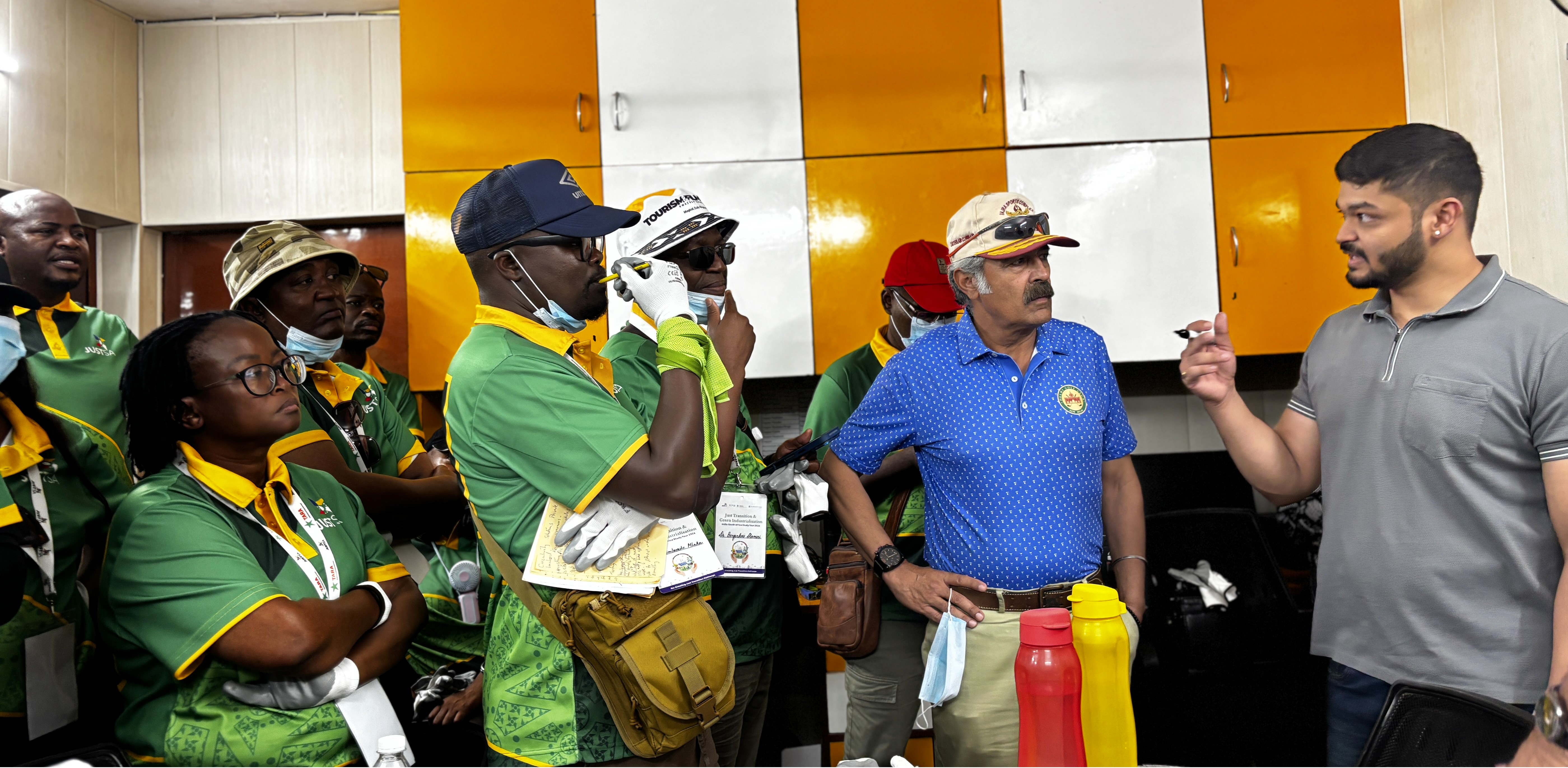
Delegates discuss the economics of e-waste recycling with the CSPL team.
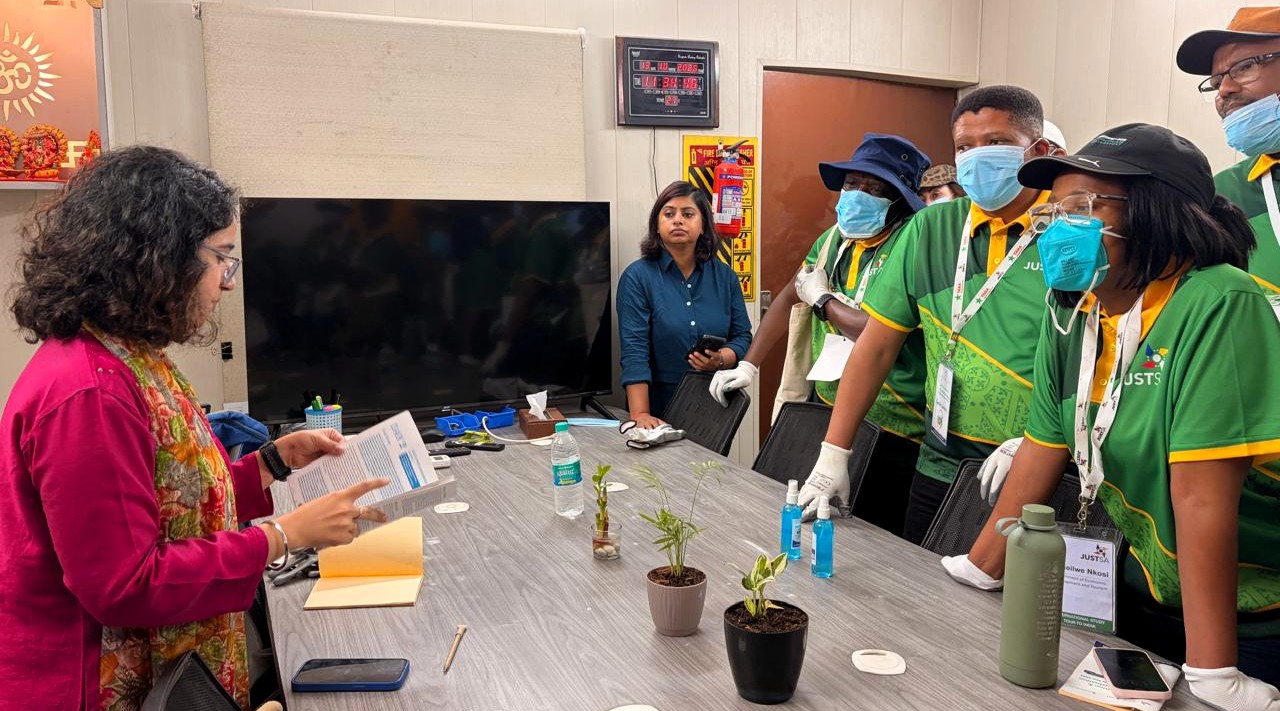
At Karo Sambhav’s CSPL facility, delegates learn how discarded electronics are recovered and processed into reusable materials.
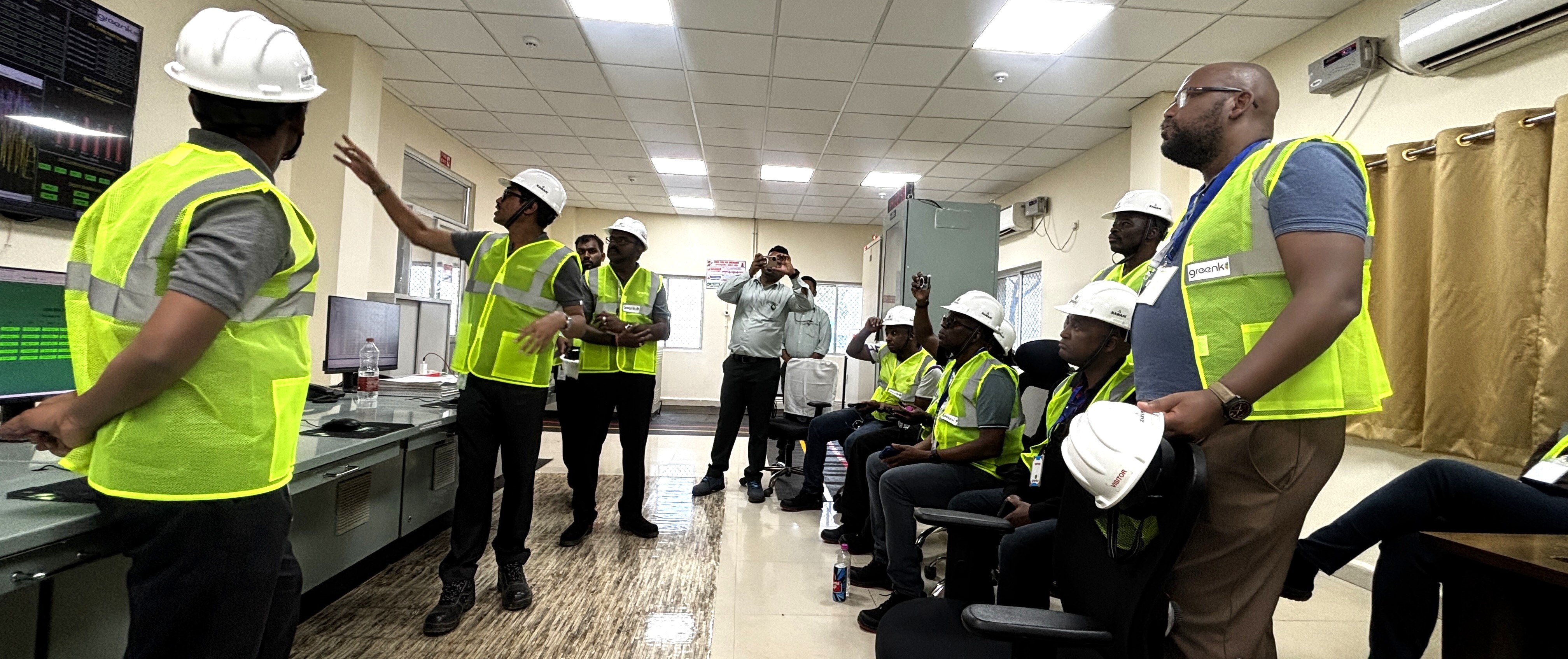
Behind the panels at Greenko’s Shivpuri solar plant, delegates saw the operations that keep clean energy flowing to the grid.






 Live Radio