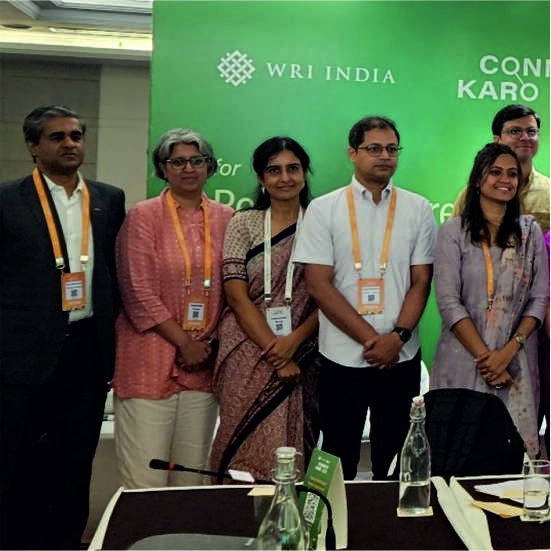
Development Alternatives participated in WRI India’s Connect Karo 2026, contributing perspectives across two roundtables focused on advancing integrated rural development and accelerating the transition towards low-carbon built environments.
#ConnectKaro
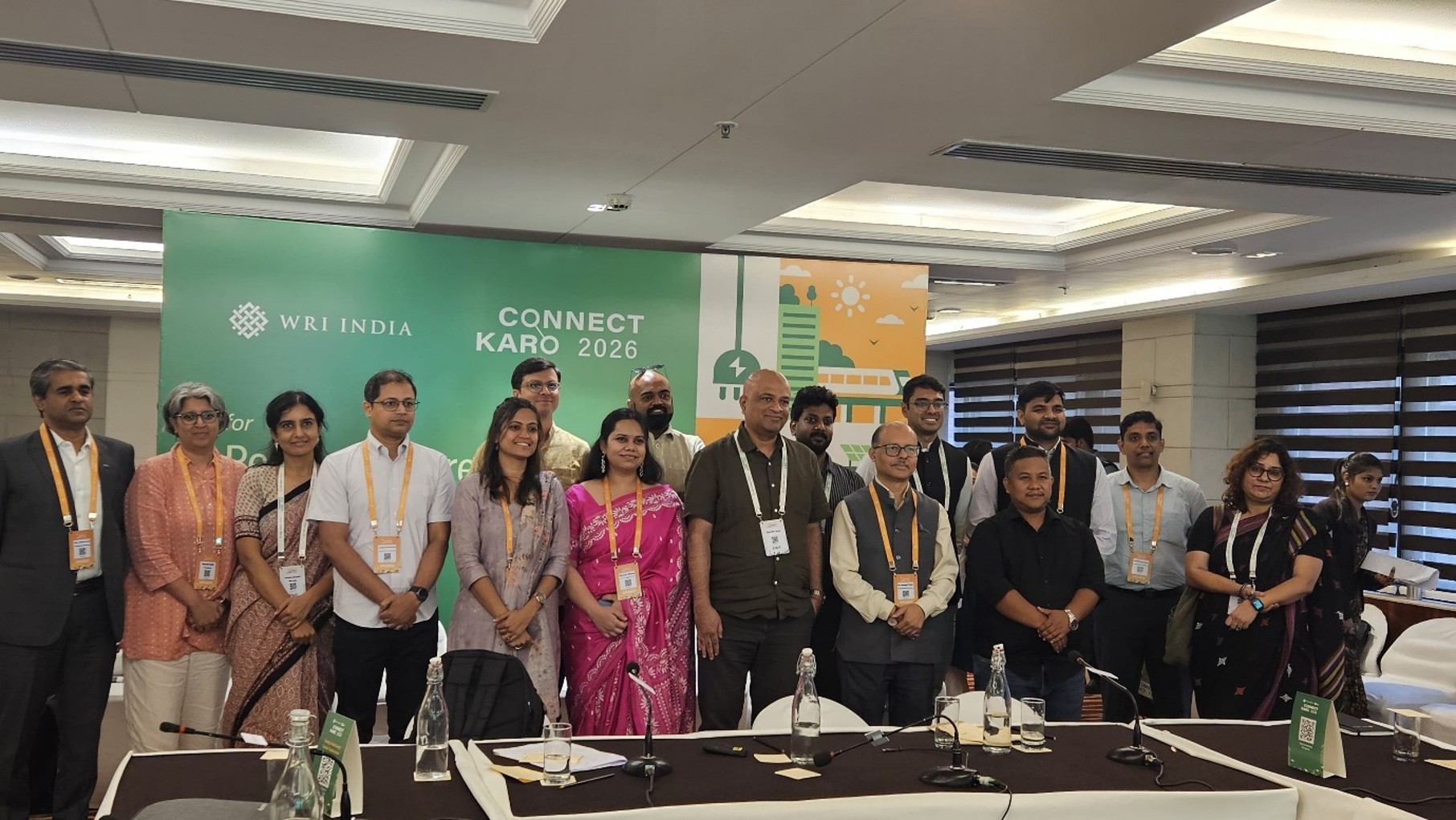
Far left: DA’s VP, Capt. Ashish Jacob at WRI India’s Connect Karo Speaker panel
Development Alternatives participated in WRI India’s Connect Karo 2026, contributing perspectives across two roundtables focused on advancing integrated rural development and accelerating the transition towards low-carbon built environments.
Rural Energy Systems TransformationCaptain Ashish Jacob, Vice President, Development Alternatives Group, joined the roundtable “Framing a Rural Energy Systems Transformation”, which brought together experts to explore how energy can be integrated into broader rural development processes, moving beyond standalone technology deployment to examine its connections with agri-food systems, essential services, rural mobility and local governance.
The discussion explored a fundamental question: once energy arrives in a village, what is that energy for, and how does it connect with water, food, livelihoods and local governance?
Drawing on four decades of Development Alternatives’ work in landscapes such as Bundelkhand, Captain Ashish Jacob highlighted two key considerations. First, the institutions needed to enable such integration, largely already exist. In Development Alternatives’ work, the Urja Mandala, a women’s enterprise collective, brings together energy, water, food and livelihoods, reflecting the interconnected realities of the household economy. This approach aligns closely with the REST framework articulated by Dr. Arundhita Bhanjdeo. The opportunity, therefore, lies in convergence, strengthening and enabling fewer, more capable institutions rather than creating new ones.
Second, he emphasised the need to move from scheme-based to place-based delivery. Seeding one model village per district can provide a starting point, but a “lighthouse” alone does not illuminate an entire district. The next step is to embed energy within village development plans, create district-level platforms that bring departments together and connect DISCOMs with assets already present on the ground, and design financing that supports the development plan, not simply the installation of a panel.
Advancing Private Sector Action on Low-Carbon Building MaterialsDevelopment Alternatives also contributed to the roundtable “Advancing Private Sector Action on Adoption of Low Carbon Building Materials,” where Dr. Rahaman represented Development Alternatives Group. The session brought together stakeholders from across the construction and cement value chain to discuss pathways for accelerating the adoption of low-carbon materials.
Dr. Rahaman shared perspectives on the opportunities and challenges associated with Limestone Calcined Clay Cement (LC3) in India. LC3 can significantly reduce clinker content and deliver upfront reductions in embodied carbon. As the availability of conventional supplementary cementitious materials such as fly ash becomes increasingly constrained, LC3 could become an important pathway for further clinker reduction in the cement sector.
India also has significant clay resources, with initial mapping indicating deposits across several regions. However, resource availability alone does not guarantee industrial adoption. Variations in clay quality across regions, coupled with limited quantitative data on the availability, quality and suitability of clay resources, can create uncertainty for cement manufacturers and constrain investment in LC3 technologies and production facilities.
The discussion underscored the need for systematic clay mapping, resource characterisation and reliable quantitative data to reduce investment risks and build confidence among industry stakeholders. Closing these information and resource gaps can help unlock the wider adoption of LC3 and accelerate India’s transition towards lower-carbon cement.
Together, the two discussions at WRI Connect Karo 2026 highlighted the importance of moving beyond standalone interventions, towards integrated, place-based approaches that connect energy, livelihoods, natural resources, infrastructure and low-carbon development.
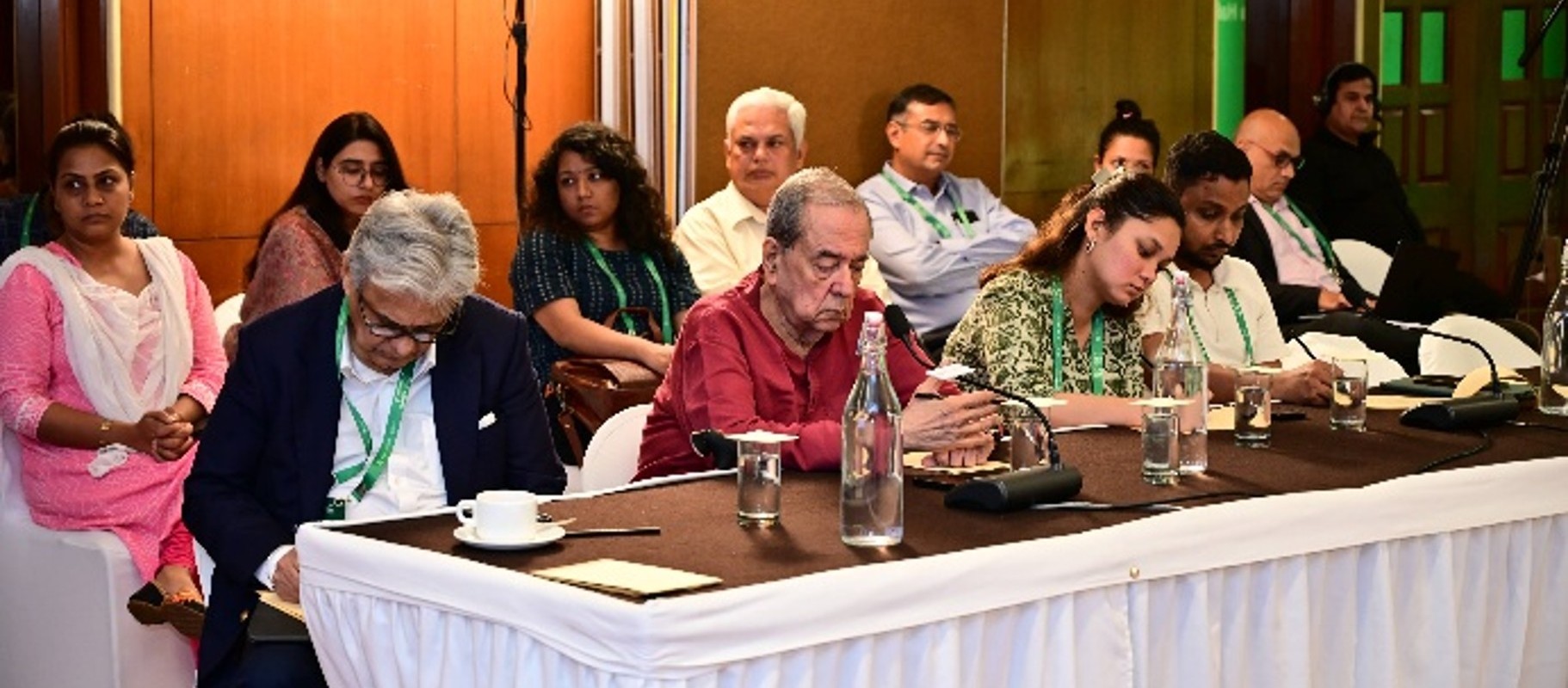
Team DA at WRI conference
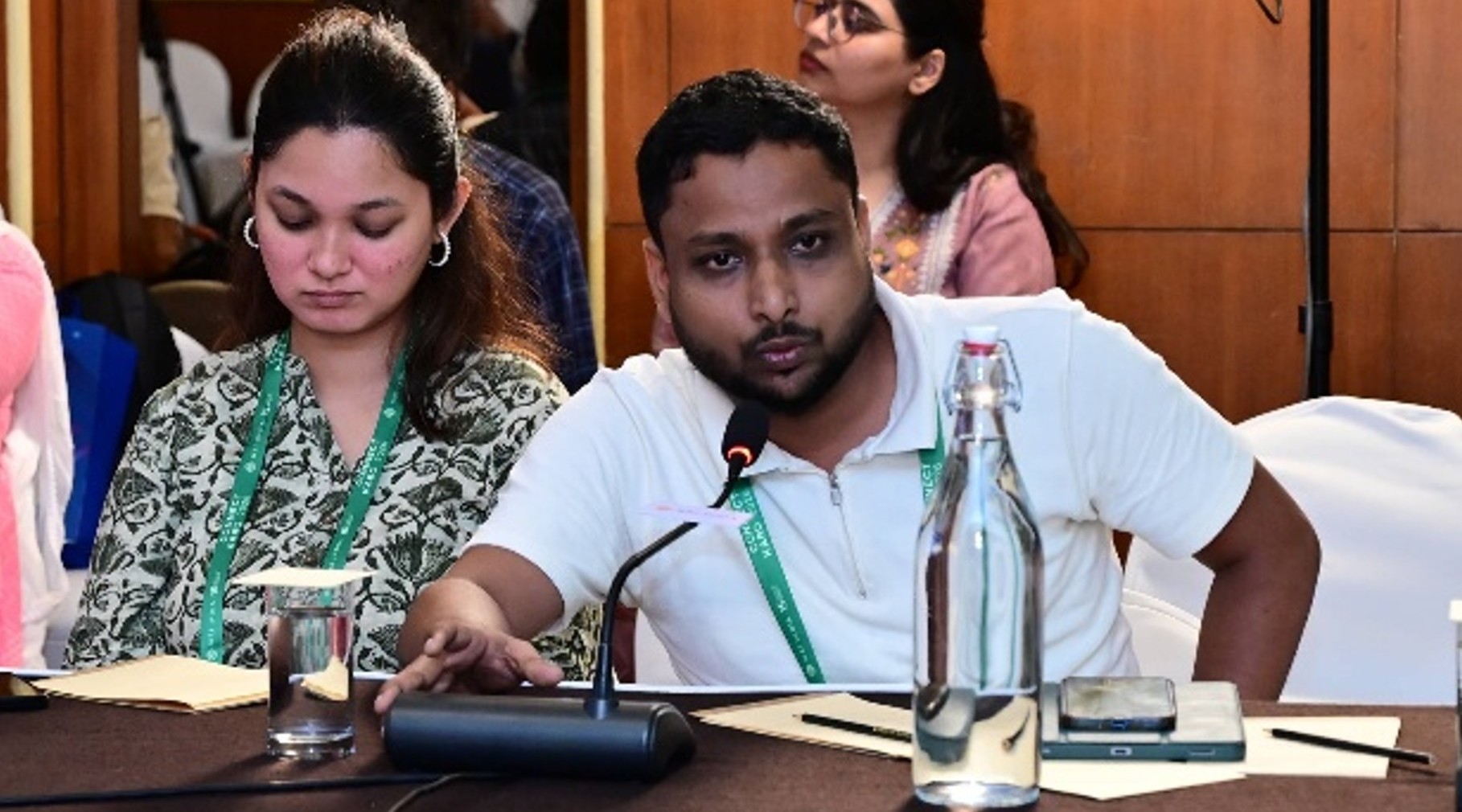
Dr. Rehman speaking on the quality of LC3 cement
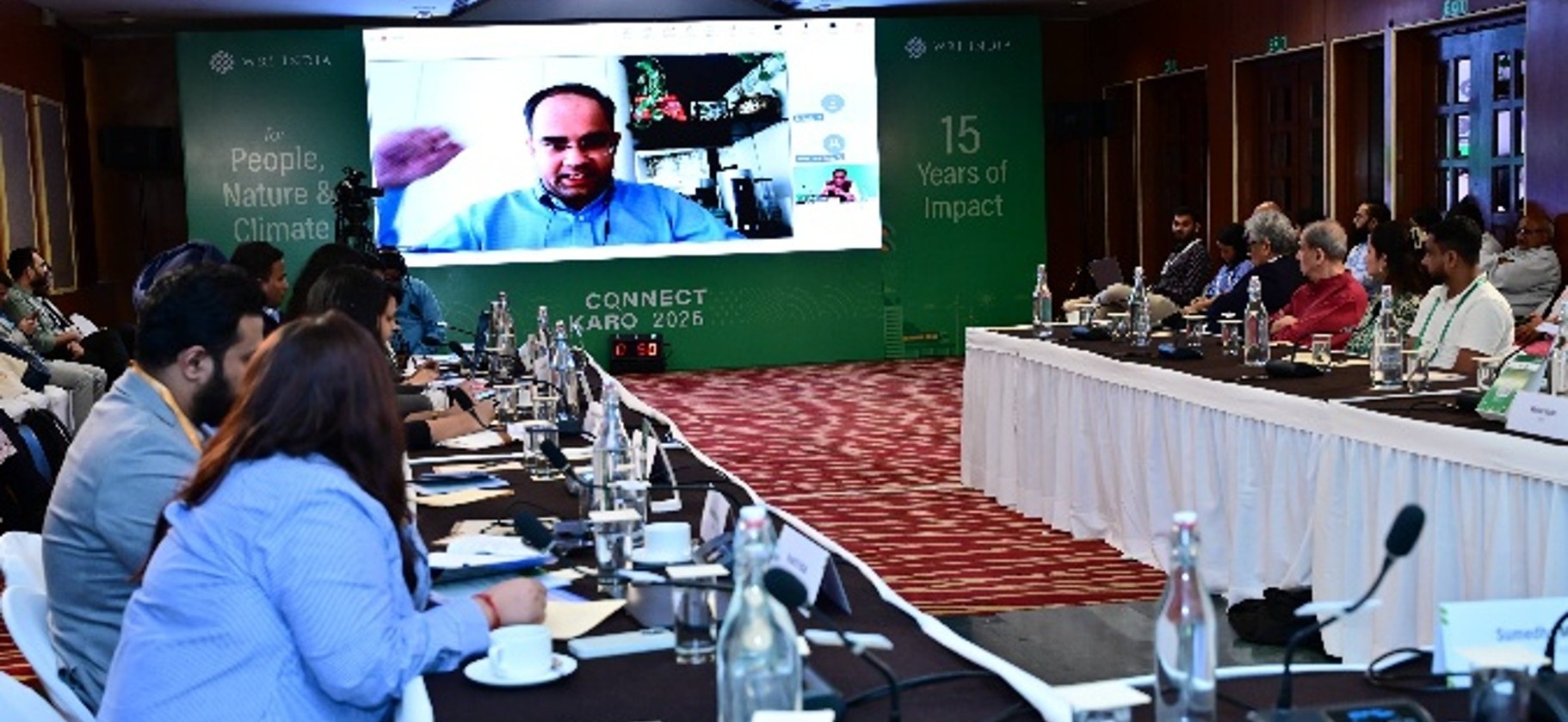
Workshop in progress





 Live Radio