Training local stakeholders to champion sustainable waste and waste management
#WasteManagement
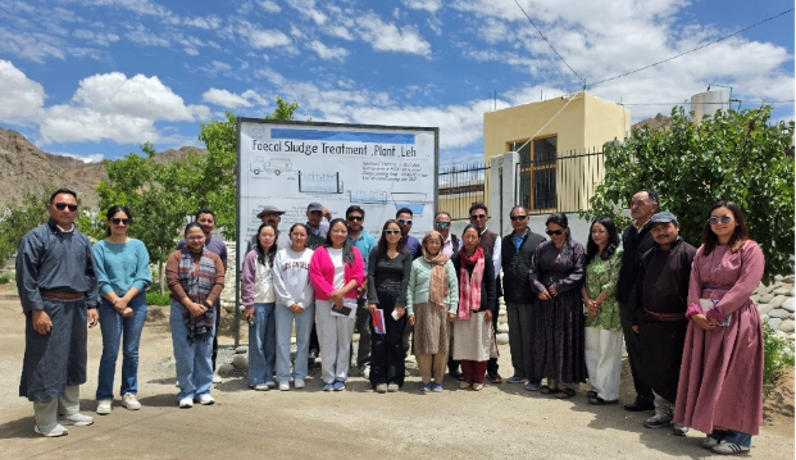
Training participants explore the functioning of an Faecal Sludge Treatment Plan (FSTP) in Leh as part of the Waste and Wastewater Management ToT programme
Through the LI & SDG Action programme, Development Alternatives, in collaboration with LEDeG (Ladakh Ecological Development and Environmental Group) and with the support of National Mission for Himalayan Studies (NMHS), conducted a Training of Trainers (ToT) on waste and wastewater management for stakeholders in Alchi and Markha, Leh under a project titled “Integrating Ecotourism, Waste Management, and Green Construction for Community Resilience and Livelihood Enhancement in the Indian Himalayan Region".
The training was given using training materials developed by Development Alternatives as part of the Waste and Wastewater Management Guidebook prepared under the project. The training brought together 18 representatives, including panchayat members, village officials, trekking guides, and community members engaged in local waste management efforts. 7 participants were selected to serve as community trainers who will subsequently conduct awareness sessions for households and communities in their respective villages.
The training was organised in two batches to address the specific needs of different stakeholder groups. The first batch focused on household and community-level waste management practices, covering source segregation, identification of different waste streams, safe handling of waste, and wastewater treatment options suitable for rural households and homestays. The second batch was designed for trekking guides, with an emphasis on sustainable tourism practices. Key topics included the Carry-Back Policy, waste segregation during treks, reducing single-use plastics, responsible campsite management, and Leave No Trace principles.
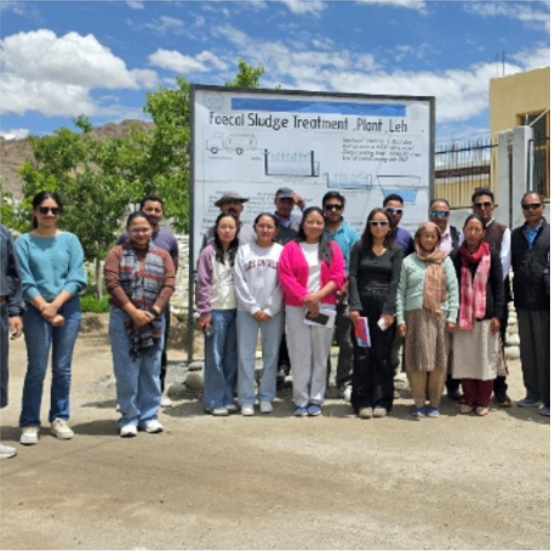
As part of the training, participants also visited a Faecal Sludge Treatment Plant (FSTP) to understand how wastewater and sludge collected from sanitation systems can be safely treated through decentralized treatment processes. The exposure visit provided practical insights into sustainable sanitation solutions that can support healthier mountain communities.
By adopting a ToT approach, the project aims to create a sustained impact beyond the training itself, enabling selected trainers to share their knowledge in Alchi and Markha, thereby strengthening local capacity for improved waste and wastewater management practices over the long term.
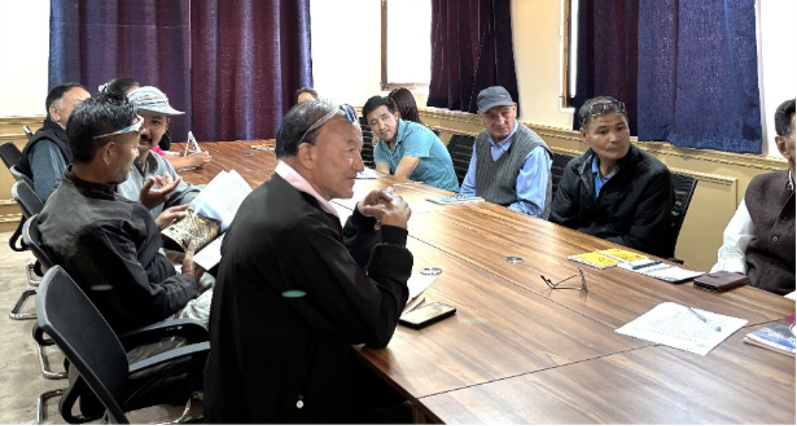
Participants attending the ToT session on waste and wastewater management for Alchi and Markha villages in Leh





 Live Radio