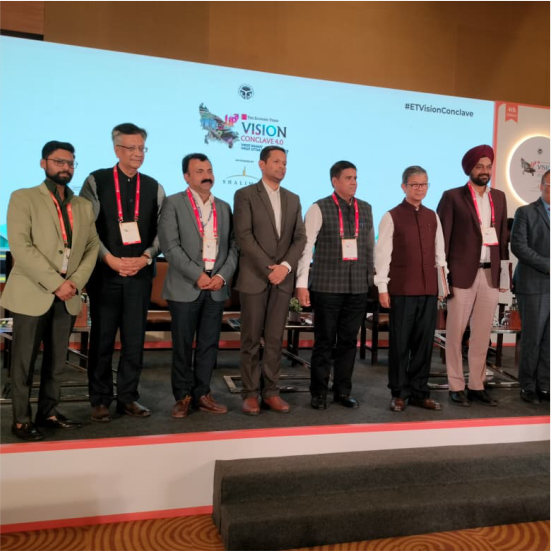
The ET Vision Conclave underscored rural entrepreneurship as a key driver of Viksit Bharat, spotlighting Development Alternatives’ bottom-up model that has enabled 37,000 enterprises and 80,000 livelihoods in Uttar Pradesh. Shrashtant Patara, CEO of Development Alternatives highlighted the power of local institutions, climate-smart market opportunities and the FIT (Finance, Institution, Technology) mantra to scale these gains statewide.
#ETVisionConclave
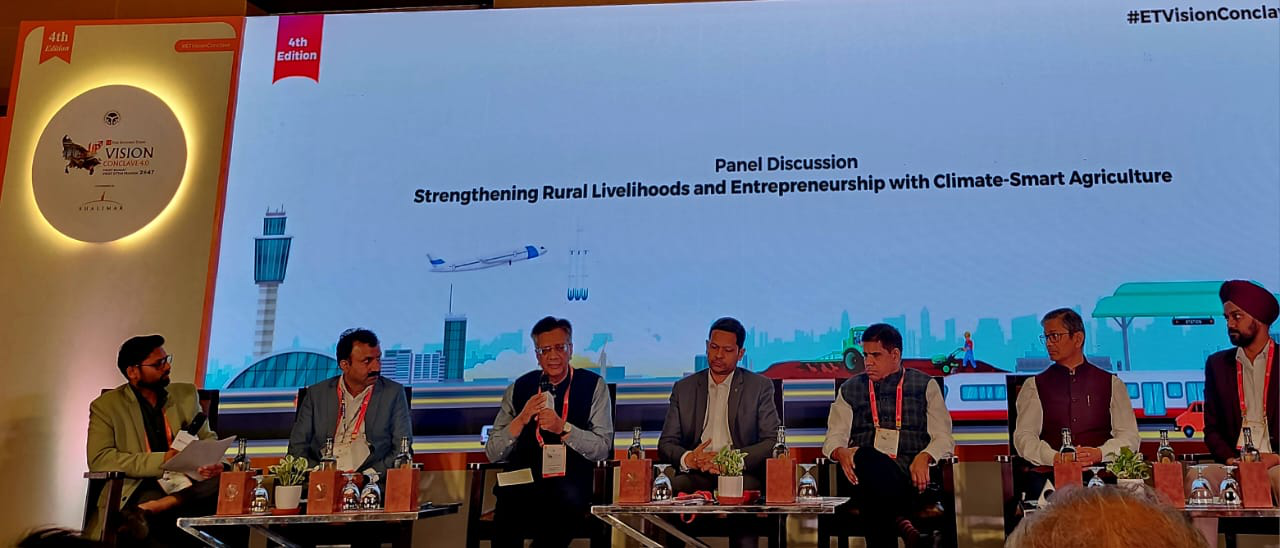
Shrashtant Patara, CEO, Development Alternatives addresses the session at the ET Vision Conclave
At the ET Vision Conclave, the conversation around Viksit Bharat took a decisive turn toward rural entrepreneurship as the core engine of development. Speaking on the panel Strengthening Rural Livelihoods and Entrepreneurship with Climate-Smart Agriculture, Shrashtant Patara, CEO of Development Alternatives (DA), laid out a compelling case for bottom-up, market-driven transformation already unfolding in Uttar Pradesh.
Over the last 18 months, DA’s collaboration with the Uttar Pradesh State Rural Livelihood Mission (UPSRLM) and grassroots partners has catalysed 37,000 new small enterprises across just 40 blocks, 64% led by women, generating 80,000 sustainable livelihoods. With 110 enterprises emerging each day, Patara noted that scaling this approach across 800 blocks could unlock 1.5 million livelihoods in a single year.
A major thrust of the discussion reframed climate-smart agriculture as a market opportunity. Instead of focusing solely on techniques or inputs, Patara argued for identifying the products and services that a climate-resilient future demands and then building finance, technology and practice around those value chains. “Once market value is understood, innovation follows,” he said.
At the heart of DA’s approach is the FIT mantra - Finance, Institutions and Technology - the triad that, in Patara’s words, “actually drives change on the ground.” This includes both modern and traditional technologies, and critically, the strengthening of local institutions. DA’s work with 150+ Cluster-Level Federations has helped build a horizontal entrepreneurial ecosystem - thousands of community-led micro-movements rather than a single imposed model.
Patara made a case for distributed, locally powered innovation. Development, he emphasized, is most effective when districts are treated as units of “Vikas” - centres where local customisation, convergence and experimentation drive solutions.
The event also spotlighted the catalytic role of policy. The Sukshma Udyam Sakhi initiative - operationalised with DA’s support will train 13,000+ women enterprise-support cadres across 75 districts this year, embedding entrepreneurial servicing at the community level. Schemes like the CM Yuva Yojana, he noted, have already ignited significant enthusiasm among youth to launch micro-enterprises.
Patara closed with a bold reimagining of MSMEs: not merely as production units, but as brands and market actors. Citing examples such as locally made LED bulbs or community-produced snacks gaining regional traction, he argued that when micro-enterprises are valued for their identity and market position, rural prosperity becomes tangible and enduring.
The ET Vision Conclave thus offered a bold message: India’s rural transformation will not be engineered from the top - it will be built horizontally, enterprise by enterprise, community by community.
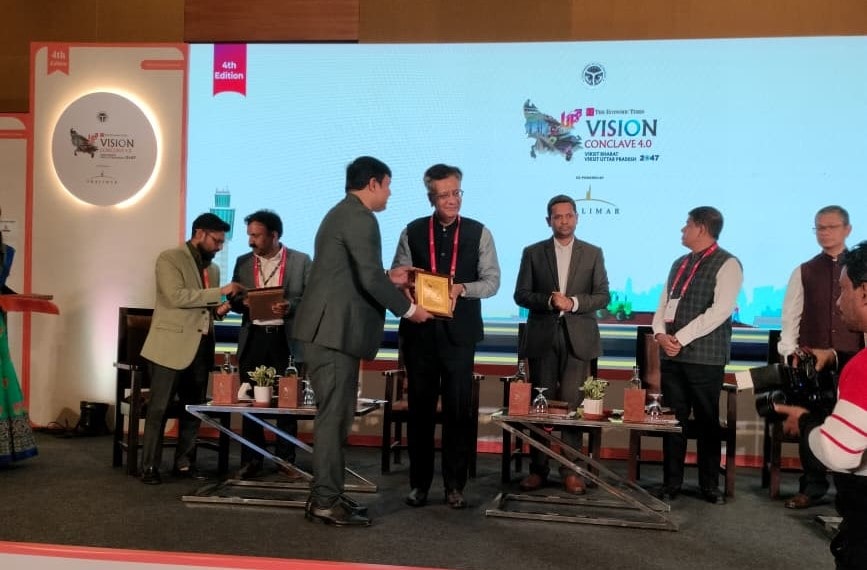
Shrashtant Patara receives a memento in recognition of Development Alternatives’ contributions to strengthening community-led enterprise ecosystems in rural Uttar Pradesh
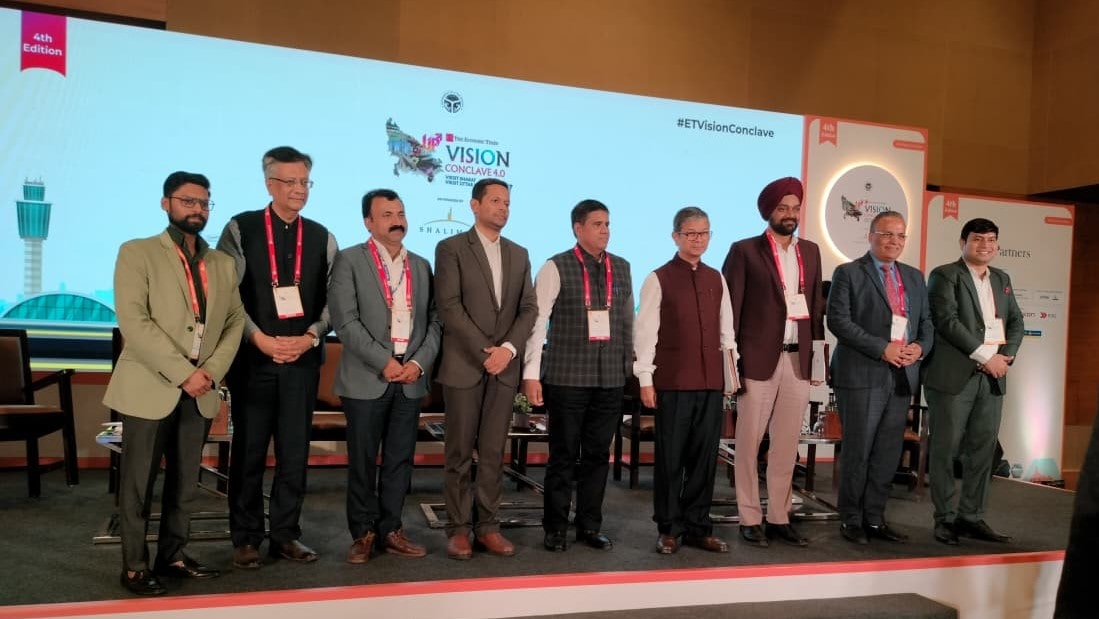
Group photo with the panelists






 Live Radio