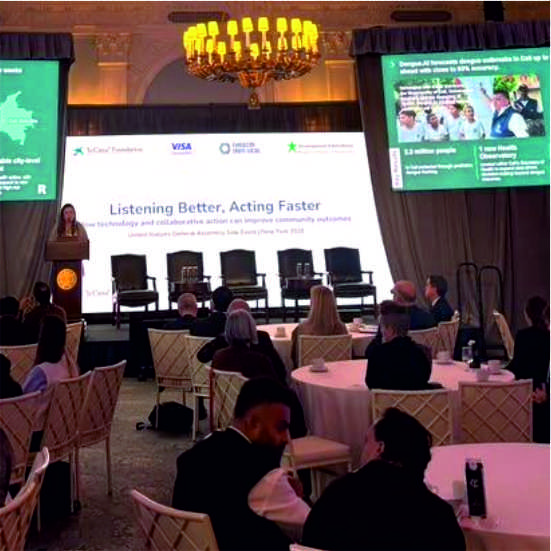
UNGA side event explores technology and collaboration for community outcomes.
#ListeningBetterActingFaster
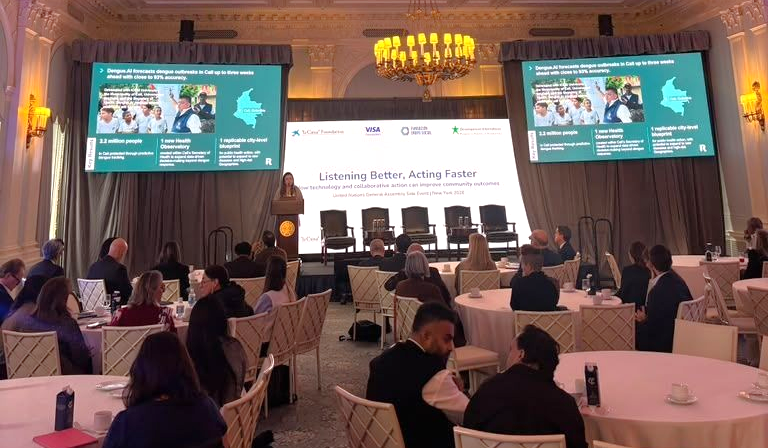
UNGA side event at The Yale Club, New York, bringing together philanthropy, social innovation, investment and development practice.
Development Alternatives co-organized Listening Better, Acting Faster: How technology and collaborative action can improve community outcomes, a United Nations General Assembly side event held on 22 September 2026 at The Yale Club, New York, with Fundación Grupo Social, Visa Foundation and "la Caixa" Foundation. The event brought together philanthropy, social innovation, investment and development practice around one question: how do we build systems that listen better, learn faster and respond to what communities are telling us?
The event began from the premise that no single institution can solve today's challenges alone, and that the future of impact depends on stronger collaboration across sectors. It examined how philanthropy can evolve beyond funding individual projects towards collaborative platforms, portfolio approaches and catalytic capital. It also explored how AI and data can help cross-sector partnerships learn faster, identify emerging needs and scale effective solutions, and what it takes to move from collaboration as an intention to collaboration that can respond to change on the ground.
The programme opened with welcome remarks from H.R.H. the Infanta Cristina, Director of the International Area, "la Caixa" Foundation, and Juan Carlos Gómez Villegas, President, Fundación Grupo Social. Gorka Espiau, Director at Agirre Lehendakaria Center and Scientific Director of Work4Progress, delivered the first keynote, From Systems Thinking to Intelligence-Driven Systems. Lyana Latorre Sabogal, Vice President, Latin America and the Caribbean, The Rockefeller Foundation, delivered the second, Leveraging AI to Accelerate Learning, Growth and Adaptability.
The panel, Intelligence-Driven Systems: Building Ecosystems that Learn, Adapt and Respond, was moderated by Alan Robbins, Co-Founder and Executive Vice President, Devex. Speakers were Abishkar Shrestha, Head of Investments, Visa Foundation; Paola Ximena Silva Cortés, Chief Territorial Transformation Officer, Fundación Grupo Social; and Shrashtant Patara, Chief Executive, Development Alternatives and IMEDF, who brought perspectives from DA's experience of building locally grounded entrepreneurial ecosystems in India, alongside experiences from other geographies and institutions.
The discussions reflected a shared recognition that technology and AI can strengthen the ability to learn and respond, but lasting change also depends on the relationships, local intelligence and collaboration that make collective action possible.
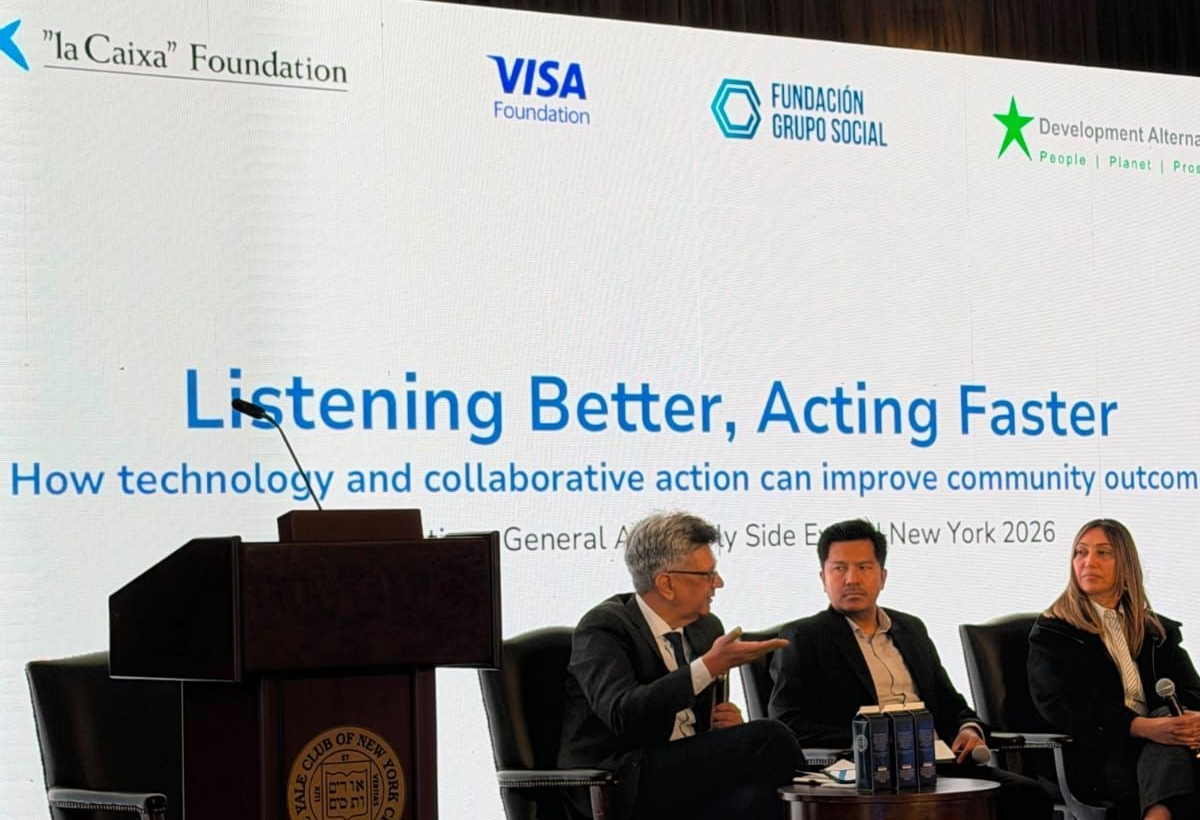
Shrashtant Patara in discussion during the panel on Intelligence-Driven Systems: Building Ecosystems that Learn, Adapt and Respond





 Live Radio