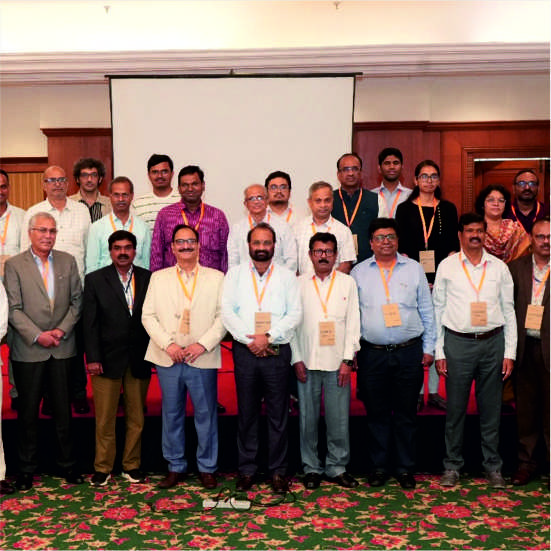
The workshop brought together government, cement industry and research stakeholders.
#LC3
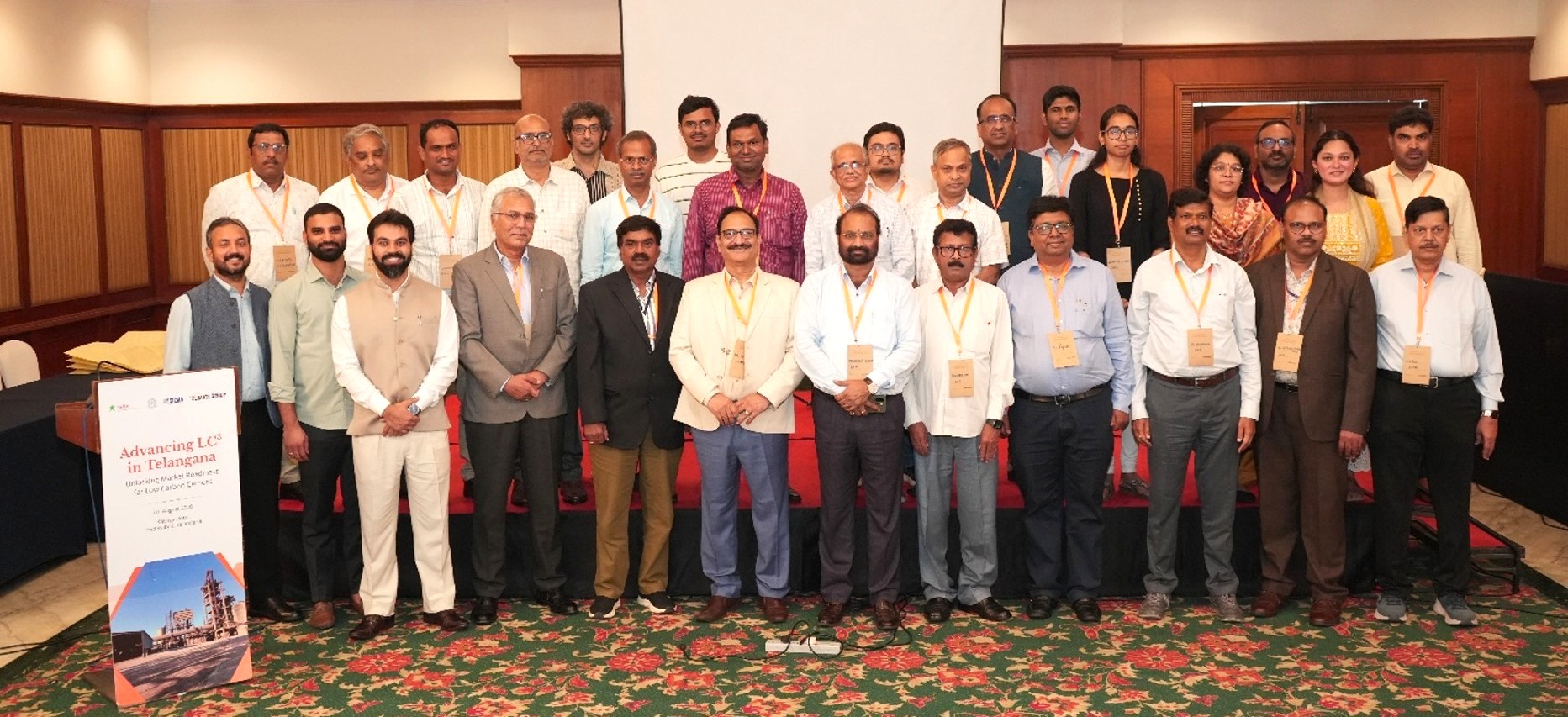
Snapshot from the workshop in Hyderabad
The workshop on advancing Limestone Calcined Clay Cement (LC3) in Telangana brought together representatives from government, the cement industry, and research institutions to discuss barriers and opportunities for scaling low-carbon cement. Discussions focused on raw material availability, production feasibility, demand, technical capacity, and policy support.
Telangana's position as a major cement-producing state, with limestone resources and an established cement manufacturing ecosystem, provides a strong foundation for LC3. Participants emphasised reducing the clinker factor as a pathway for cement sector decarbonisation, with LC3 offering a technically feasible alternative to OPC. Sub-grade limestone, suitable clay, and usable overburden were identified as opportunities, while systematic testing and characterisation remain necessary to establish suitability and quality.
A priority is mapping and characterising clay-bearing areas, as existing cement mines may not contain suitable clay. Reliable information on resource quality, quantity, location, and accessibility — alongside landed cost and transport logistics — will be important for commercial feasibility.
On the demand side, government procurement and public infrastructure projects were identified as levers to create market demand. Pilot applications and phased procurement could demonstrate performance and build market confidence.
Building technical capacity — among developers, contractors, engineers, consultants, and RMC producers — was also identified as a priority, spanning LC3 mix design, durability, carbonation, admixture compatibility, long-term performance, and life-cycle assessment (LCA).
The workshop concluded that coordinated action across supply, demand, and technical ecosystems is essential to move from technical feasibility to market adoption, supported by resource mapping, pilot projects, procurement, capacity building, and appropriate policy and financial incentives.





 Live Radio