Development Alternatives Group, a proud member of the Scientific Committee on Agroecology in the Indian Himalayan Region for India, Nepal and Bhutan.
#HimalayanAgroecology
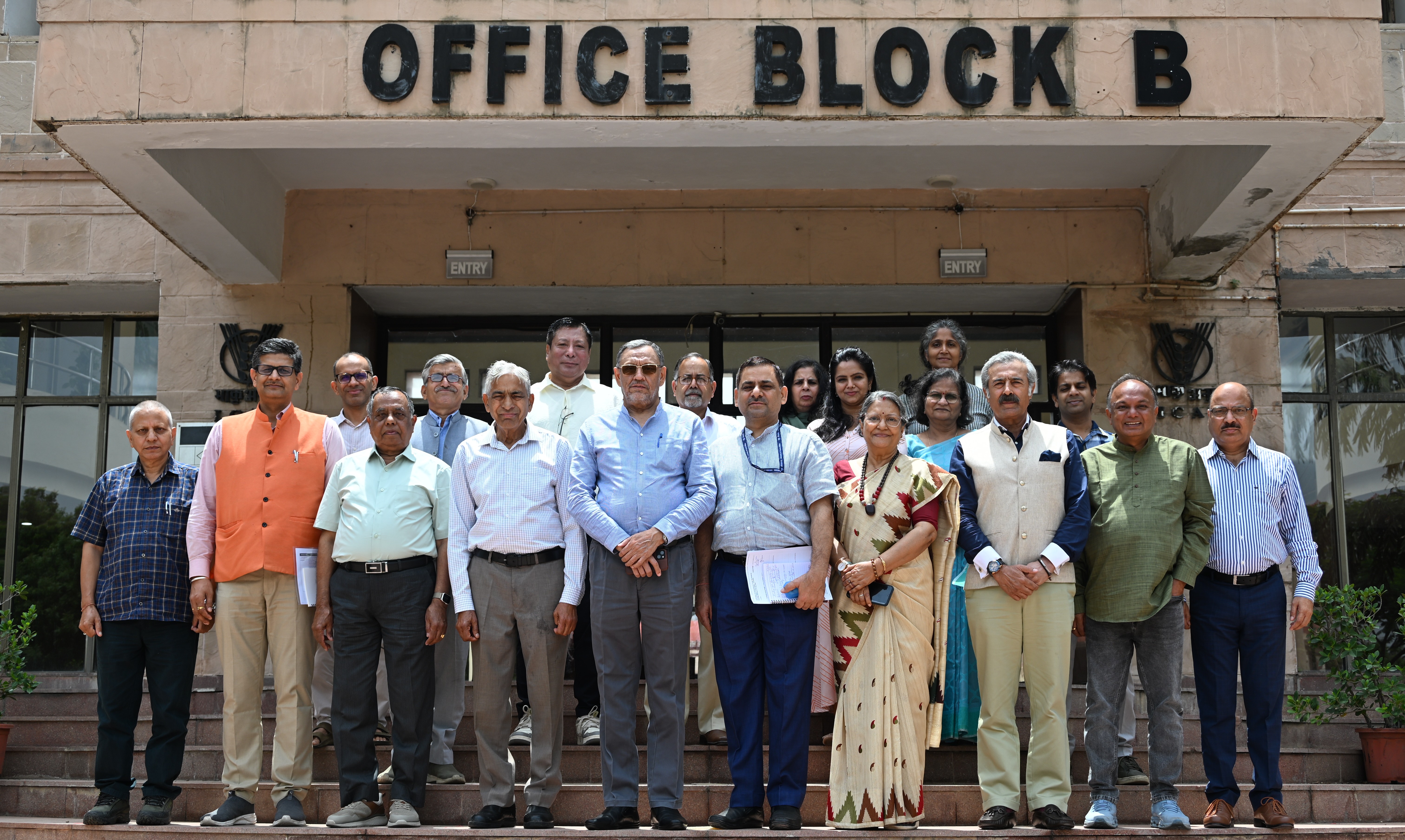
National Scientific Committee members of the Himalayan Agroecology Initiative
The Indian Himalayan Region (IHR) spans 13 States and UTs, covering 16% of Indian landmass and supporting 50 million people. By 2047, the IHR is envisioned as India's flagship landscape for science-led Agroecological (AE) transformation and a globally recognised model for resilient mountain food systems that are ecologically regenerative, nutrition-sensitive, economically viable, socially inclusive and climate risk adaptive.
As a member of the Himalayan Agroecology Scientific Committee, part of the Himalayan Agroecology Initiative for India, Nepal and Bhutan, Brig. Yogesh Kapoor, VSM (Retd), articulated his views in the third round of iterations held at the National Academy of Agricultural Sciences, Pusa, New Delhi, representing the Development Alternatives Group. The study has been jointly undertaken by Alliance of Biodiversity International and UNDP, coordinated by the World Future Council and IFOAM-Organics International.
The IHR food system is characterised by small and fragmented holdings, rainfed production, high dependence on springs and forests, mixed crops-livestock systems, community-managed resources and rich agrobiodiversity, with strong linkages between farming, nutrition, culture and ecosystem services.
Concurrently, stresses are rampant, exposing the region to coupled climatic, ecological, demographic and market forces. The Agroecological transformation will require factoring varied altitude conditions across the valley, mid-altitude and highlands, prioritising the region's economic fragility, and accounting for micro-climate density and socio-cultural nuances, judiciously.
Sustainable Agriculture is a must for food sovereignty. The approach connects ecology, natural-resource governance, nutrition, markets, finance, research and accountability, building on Natural and Organic farming, watershed and springshed restoration and state innovations. This well-researched document, centring indigenous people and Traditional Indian Knowledge, will become the Lighthouse Report and a Foundational Framework for policy-makers and researchers alike.
Under the VIIth Schedule of the Indian Constitution, Agriculture is a state subject, whilst, promoting Religious Tourism and its attendant development often becomes a national initiative. Given the fragility of the Himalayan ranges, the two promotions are often dichotomous and may operate at cross-purposes, bearing calamitous consequences for the region, that needs guarding against.
The roadmap document is set to be released by Oct 26, post a final round of deliberations at a National Convention on the subject. The synthesis of scientific rationale, systems farming paradigms, strategic architecture and implementation pathways, factoring requisite policy coherence guidelines need to become a part of every State charter for achieving the desired impacts.
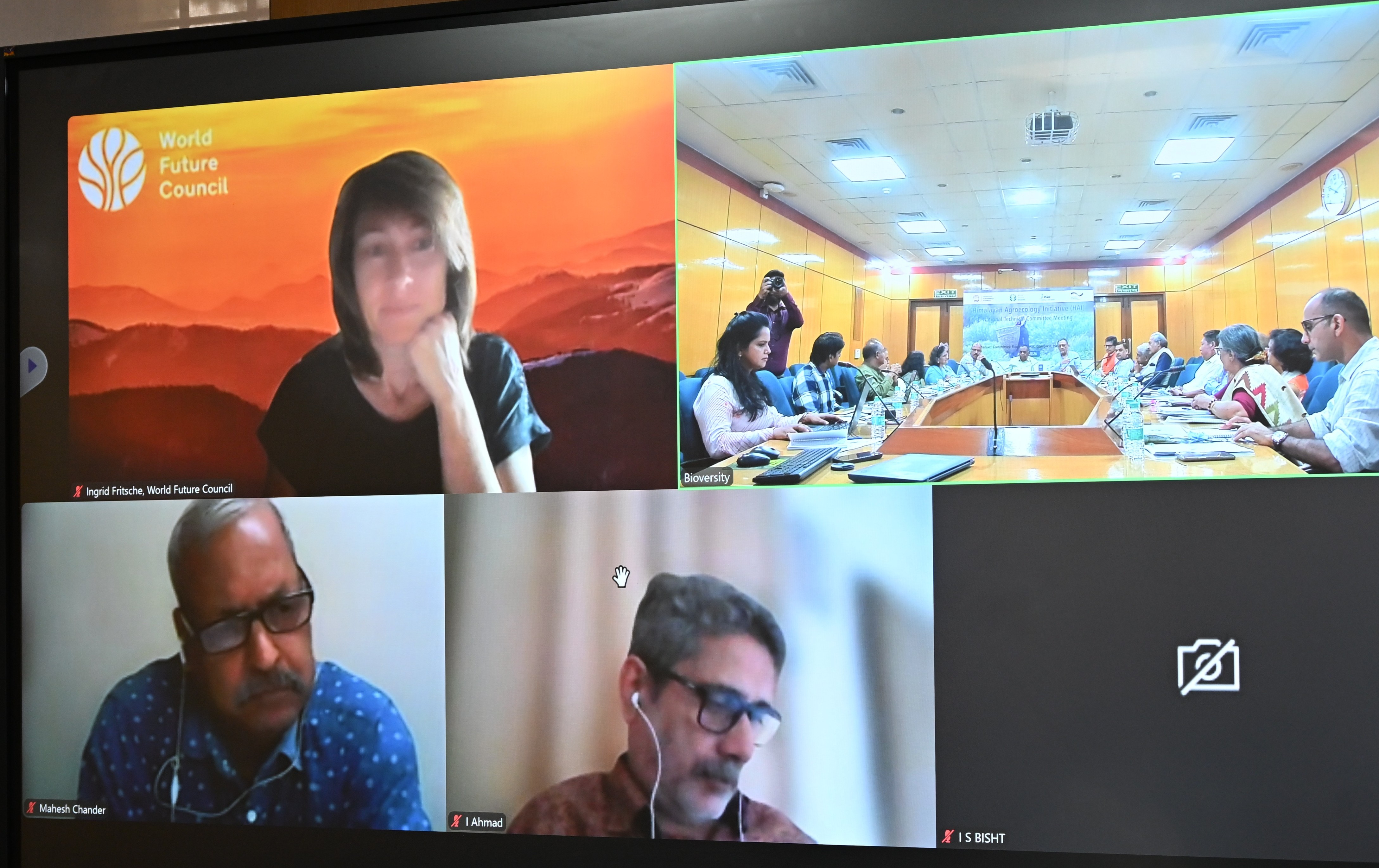
International Experts joining the National Technical Committee Meeting virtually, alongside the in-room proceedings
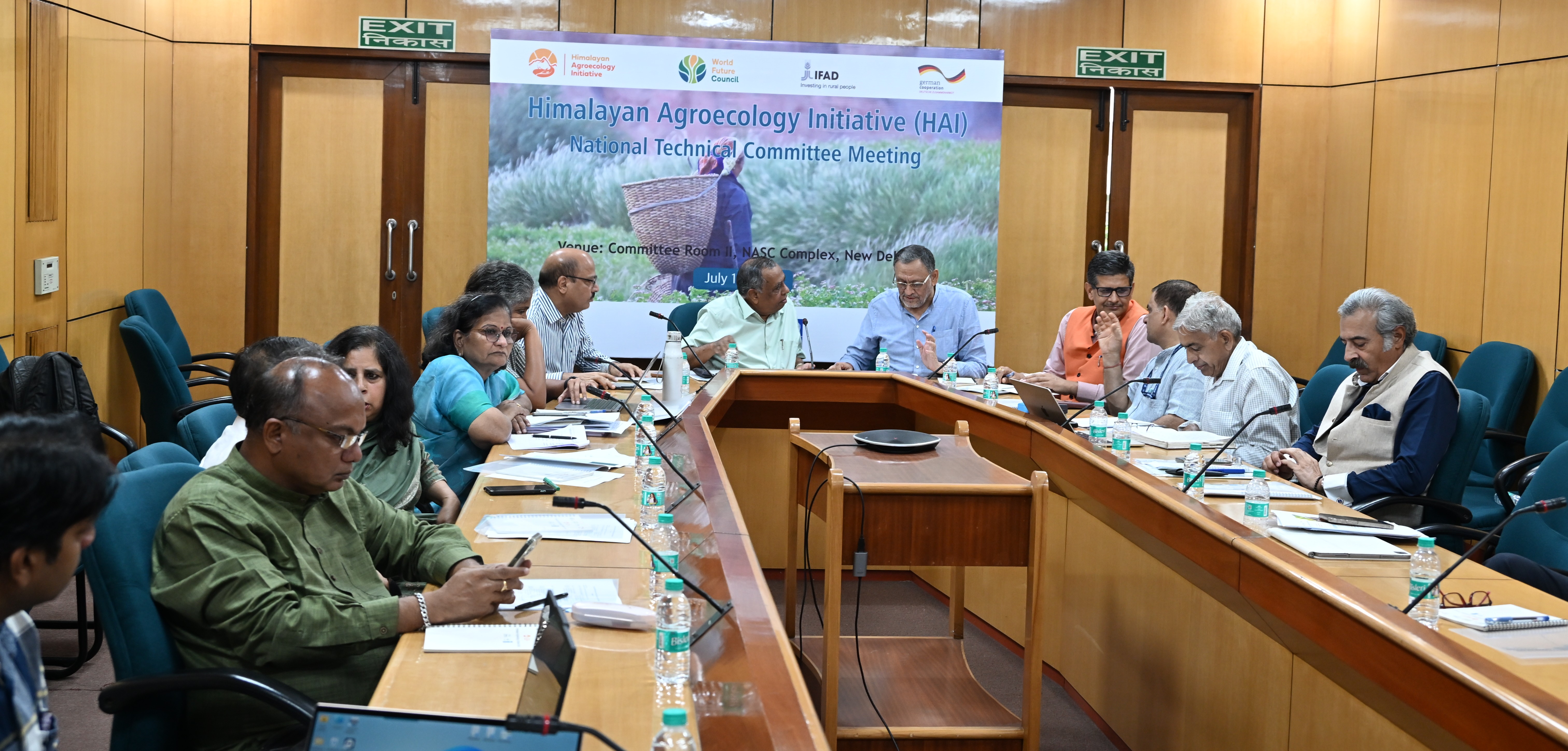
Members of the Himalayan Agroecology Initiative (HAI) National Technical Committee in session at Committee Room II, NASC Complex, New Delhi.






 Live Radio