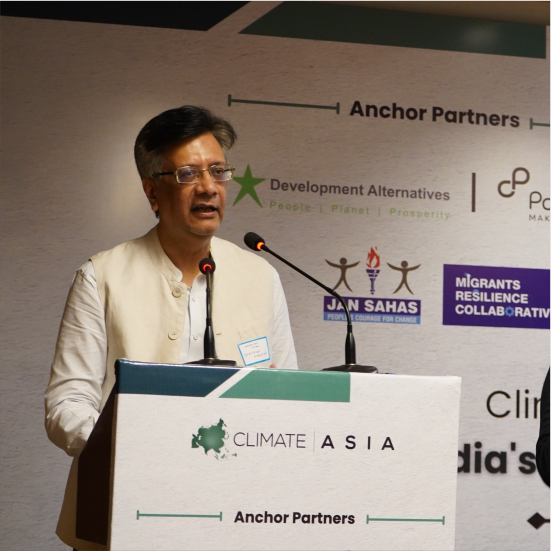
Development Alternatives was one of the anchor partners at Climate Asia’s Annual Conference 2026, convening leaders across finance, institutions, technology, governance, and communities to accelerate India’s climate transition
#ClimateTransition
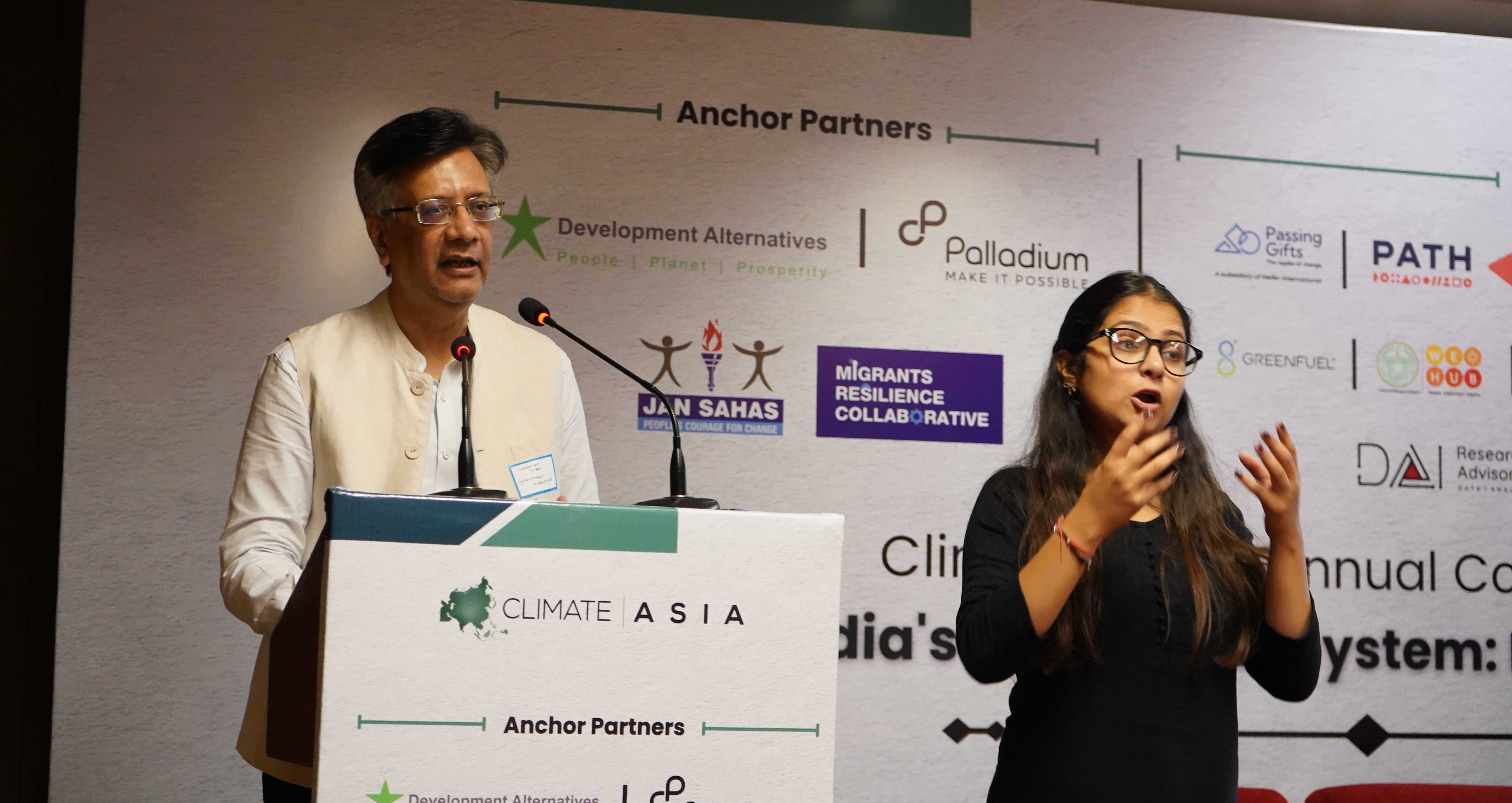
Shrashtant Patara, CEO, Development Alternatives, delivers a special address at the Climate Asia Annual Conference 2026
Development Alternatives served as the anchor partner for Climate Asia Annual Conference 2026 - Building India's Climate Ecosystem: Innovation, Talent, Leadership. Across two days of curated plenaries, cross-sector dialogues, and practitioner-led sessions bringing together leaders working at the intersection of finance, governance, technology, and communities, the conversations focused on the critical challenges of scaling solutions, strengthening coordination, and building long-term institutional readiness.
Shrashtant Patara, CEO of Development Alternatives, delivered a special address drawing on four decades of evidence that sustainable development only holds when it is built from the ground up, a conviction that feels more urgent now than ever, as India prepares to mobilise an estimated USD 2.5 trillion in climate investment through 2030.
The Knowledge Exchange panel moderated by Kanika Verma, Executive Vice President and Lead — Sustainable Entrepreneurship Group, focused on a question that sits at the heart of DA's work: how do communities most exposed to climate vulnerability become agents of economic security, rather than after thoughts in the transition?
The session was anchored in the idea of framing resilient livelihoods through the lenses of agency, adaptability, and security, situating them within a broader systems perspective. She emphasised that resilience is not merely about income stability or recovery from shocks, but about who holds decision-making power, how livelihoods are able to evolve in response to changing contexts, and how systems create buffers that reduce vulnerability over time. Drawing on learnings, she highlighted that while individual enterprise journeys signal change, it is the convergence of institutions, community platforms, markets, and infrastructure that enables these shifts to sustain and scale. She closed by moving the conversation away from broad vision statements and instead raising a more practical question - what are we still not able to solve when it comes to building resilient livelihoods, and how do we begin to address these gaps through more connected, system-led approaches.
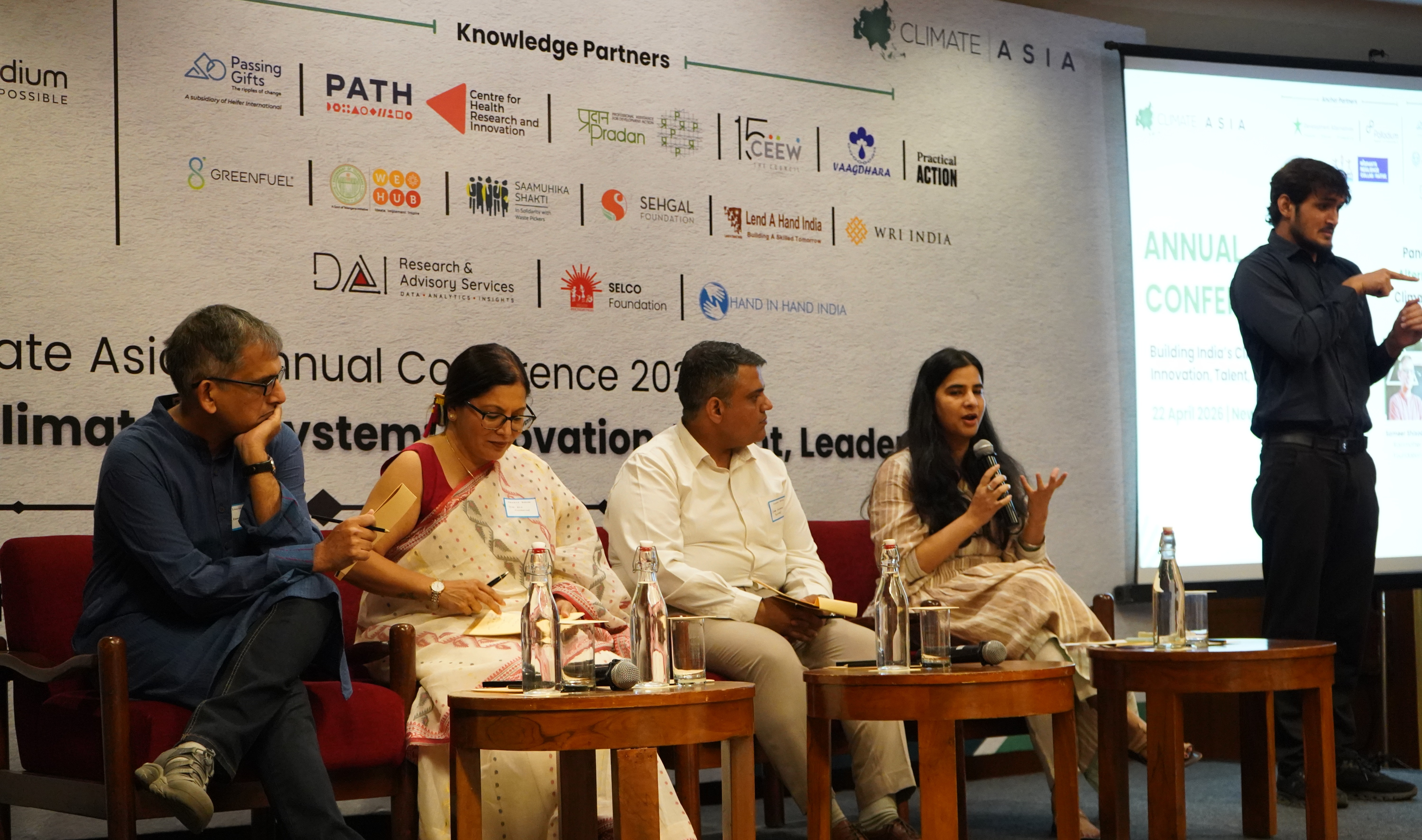
Kanika Verma, Executive Vice President & Lead - Sustainable Entrepreneurship Group, Development Alternatives, moderates the Knowledge Exchange panel on Building Resilient Livelihoods: Climate Vulnerabilities to Economic Security
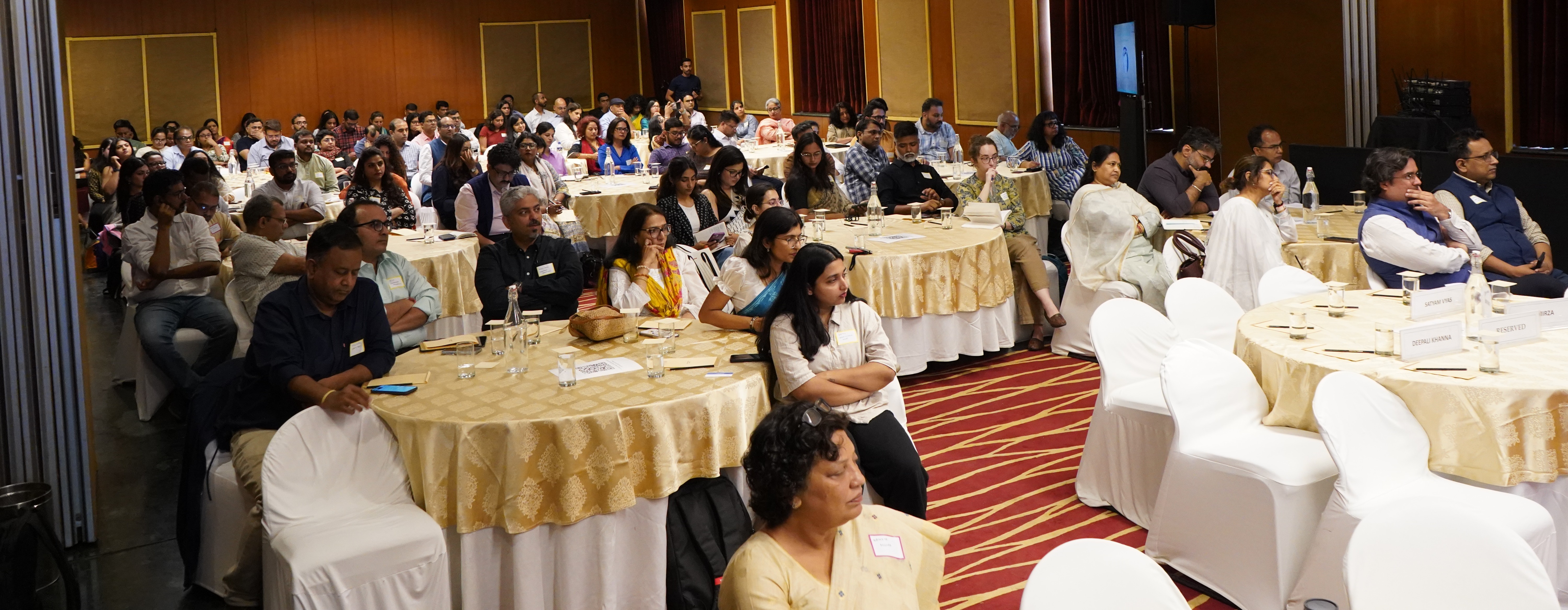
Leaders from finance, governance, technology, and civil society convene at the Climate Asia Annual Conference 2026 in New Delhi






 Live Radio