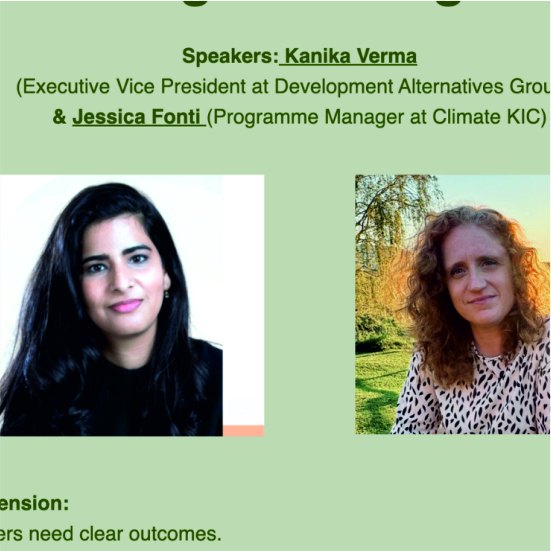
This article explores the tension between directing value and creating value in systems change, as discussed in a Climate KIC Deep Dive on systems innovation.
#SystemsInnovation
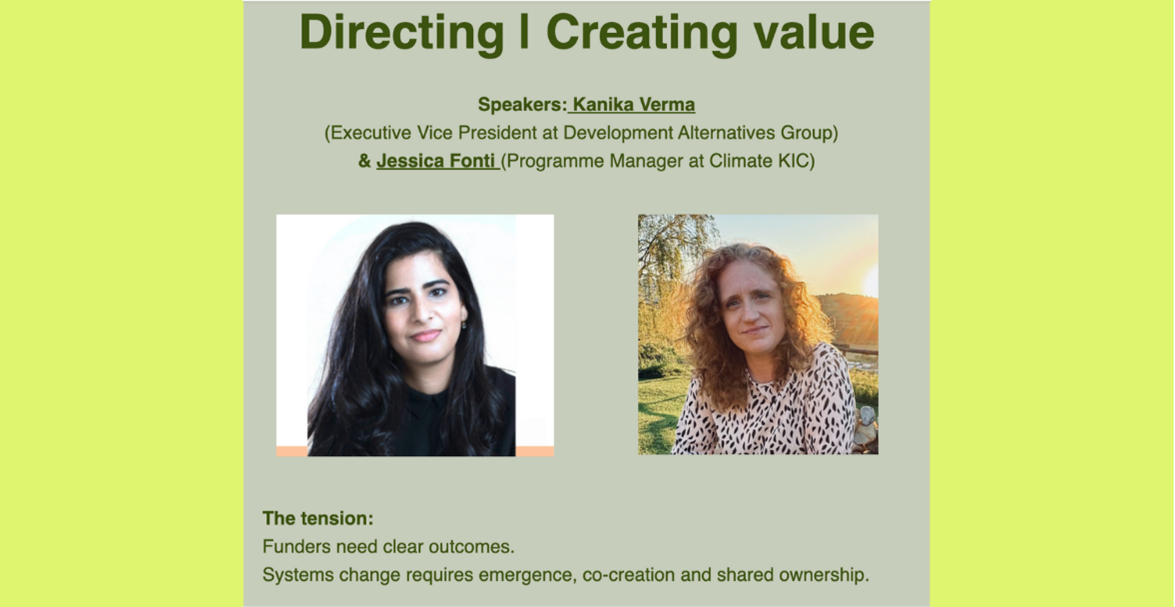
Deep Dive sessions under Climate KIC’s Systems Innovation Learning Partnerships
In one of the recent Deep Dive sessions under Climate KIC’s Systems Innovation Learning Partnerships, a deceptively simple question anchored the conversation: How do we navigate the polarity between directing value and creating value in systems work?
As an intermediary, this tension is ever-present. On one hand, systems initiatives are shaped by vertical flows of resources, funding, accountability frameworks, targets, and timelines. On the other hand, real transformation demands something far less linear: trust, shared ownership, learning, and relationships that evolve. Facilitating this conversation, Kanika Verma, Executive Vice President, Development Alternatives where she leads the Sustainable Enterprise
Vertical brought a grounded practitioner’s lens to the table, one shaped by years of working within complex, place-based ecosystems.
At the heart of systems work lies an uncomfortable but necessary inquiry: Are we responding to symptoms, or are we addressing root causes? Power dynamics—who decides, who listens, and who adapts—often determine whether an intervention reinforces existing structures or disrupts them meaningfully. Kanika reflected on how, in DA’s work, systems change begins not with predefined solutions but with deep listening. Listening not just as a method, but as a discipline that keeps the system open, adaptive, and responsive.
This approach requires intermediaries to hold structures lightly. Flexibility in design, open information channels, and embedding learning into the system itself creates conditions for trust. When learning is shared, rather than extracted or reported upward, it becomes a form of collective infrastructure. It allows actors across the ecosystem to develop a common understanding of change as it unfolds, rather than chasing fixed outcomes alone.
A pivotal moment in the conversation came when the discussion shifted from vertical to horizontal relationships. Who sits at the center of the ecosystem? In DA’s practice, Kanika emphasised, the answer is clear: never the funder, never the intermediary. It is the entrepreneur, the citizen, the person whose life and livelihood are most directly shaped by the system. Placing them at the center reshapes the conversation entirely. It redistributes voice, reframes accountability, and opens new possibilities for collaboration.
Co-creation, then, is not a workshop or a tool; it is an ongoing act. Even when the person at the center is not physically present, DA’s teams consciously hold their perspective in the room, allowing it to guide decisions and trade-offs. This intentional centering builds ecosystems that are not only more inclusive but more resilient.
As the Deep Dive surfaced, creating value in systems work is inherently emergent. It cannot be fully directed, only stewarded. Intermediaries play a critical role, not by controlling outcomes, but by cultivating relationships, enabling learning, and ensuring that the system remains anchored to those it exists to serve.
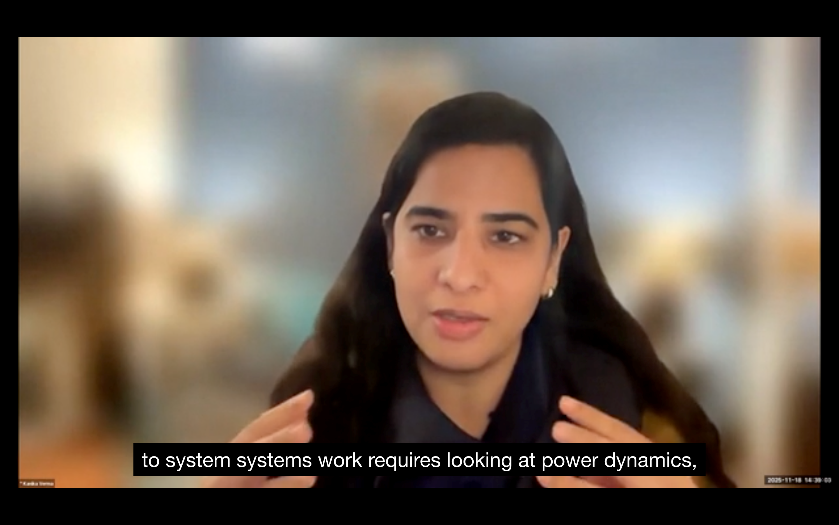
Kanika Verma in conversation: reflecting on people-centred systems change.





 Live Radio