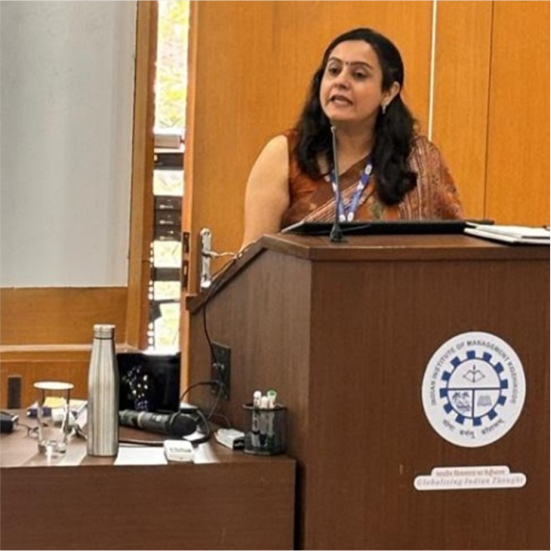
Development Alternatives joined GIT 2025 at IIM Kozhikode, where leaders and practitioners unpacked India’s path to Viksit Bharat through the lenses of work, women, and worldview. DA’s case study on digital empowerment in Lalitpur added a grounded perspective on how technology can expand opportunities for rural women.
#ViksitBharat2047
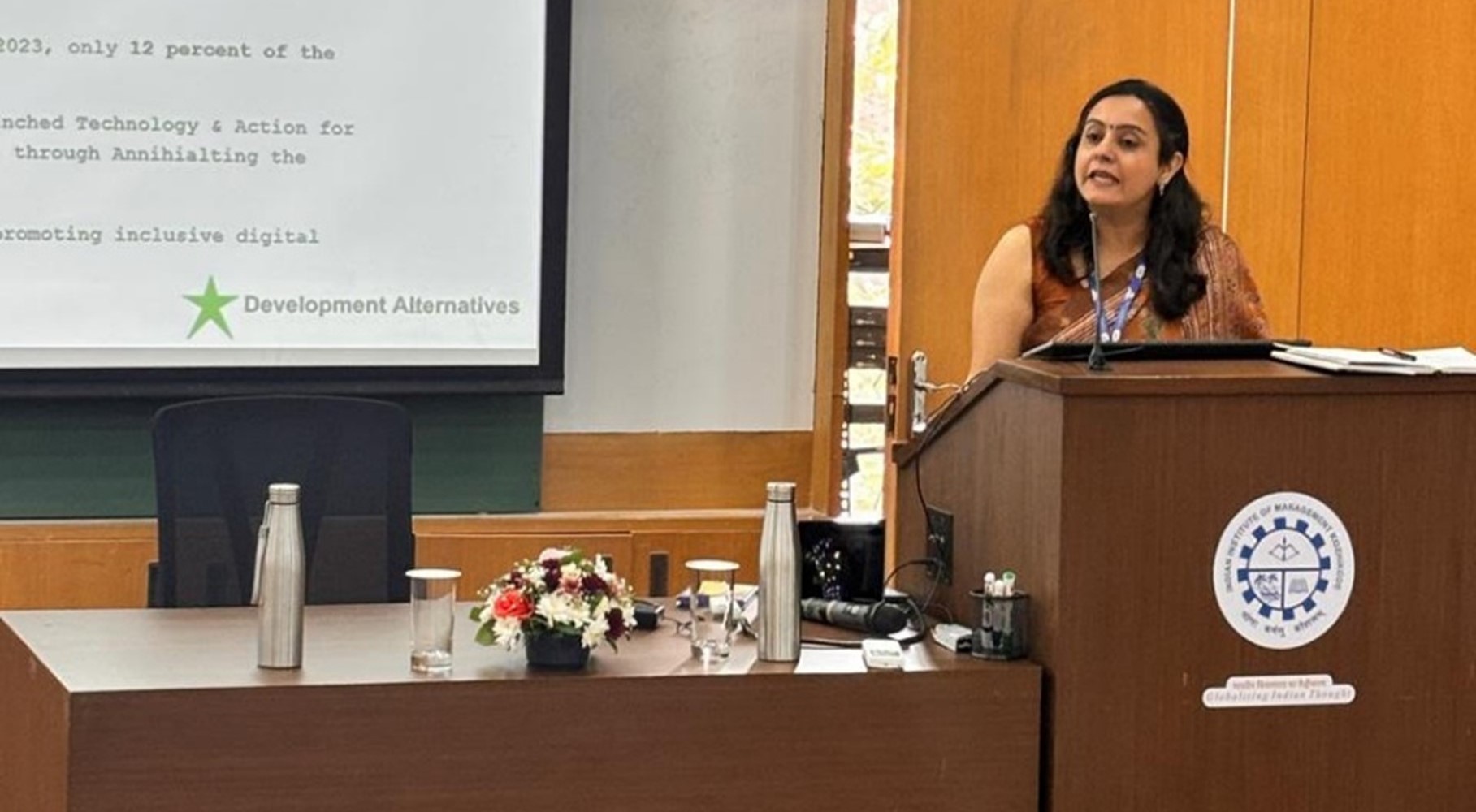
Jyoti Sharma presenting a session at IIM Kozhikode
Development Alternatives (DA) participated in the 6th edition of the International Conclave on Globalising Indian Thought (GIT 2025), hosted by the Indian Institute of Management Kozhikode from 12 to 14 November 2025. The conclave, themed “Lessons from Invisible India: Viksit Bharat – India @ 2047,” explored India’s inclusive growth journey through the 3Ws framework—Work, Women, and Worldview. The event marked IIM Kozhikode’s 50 years of contribution to Indian thought leadership and coincided with India’s vision of becoming a developed nation by 2047.
GIT 2025 brought together more than 150 scholars, policymakers, industry leaders, and social innovators for a rich interdisciplinary dialogue on India’s development trajectory rooted in its civilisational wisdom and contemporary innovations.
Some of the prominent speakers included:
• Padma Shri Kiran Labhshanker Vyas, Founder, Tapovan Open University of Yoga & Ayurveda, who emphasised the soft power of spirituality.
• Prof. Debashis Chatterjee, Director, IIM Kozhikode, who highlighted the role of Indian management philosophy in shaping global leadership.
• Ambassador Vikas Swarup, diplomat and author, who spoke about India’s soft power and cultural diplomacy on the international stage.
• Prof. Anil D. Sahasrabudhe, Chairperson of the National Educational Technology Forum, who articulated the importance of digital transformation and technology-enabled learning for inclusive education.
• Dr. Devi Prasad Shetty, globally renowned cardiac surgeon, who shared insights on healthcare innovation in India.
• Erik Solheim, former UN official and environmental leader, who spoke on sustainable development and climate action aligned with India’s worldview.
Jyoti Sharma, from Development Alternatives, presented a practice-based case study titled “Fayedi ki Ghanti: Bridging the Digital Divide,” under Track 2: Women, and the sub-track Digital Dividends: Tech & Innovation for Women’s Empowerment. The case study highlighted DA’s work in Lalitpur, supported by the Reliance Foundation, showcasing how neo-literate women were empowered through technology in the post-COVID period.
Jyoti described how DA’s multi-pronged approach created supportive ecosystems that enabled women through capacity-building initiatives, digital literacy, skill acquisition, and long-term empowerment. Using Social Behaviour Change Communication, the project facilitated societal transformation by addressing shifts in knowledge, attitudes, and practices among stakeholders. The study recommended enhancing digital integration for rural women to increase their leadership in technology adoption—an essential step considering that only 12 per cent of Common Service Centres (CSCs) are currently owned by women, as noted by the Ministry of Electronics and Information Technology (MeitY).
The conclave’s rigorous discussions and collaborative spirit among academics and practitioners from across the globe underlined critical pathways for India’s vision of Viksit Bharat by 2047, placing technology, women’s empowerment, and indigenous knowledge systems at the centre of national development strategies.





 Live Radio